India’s New Global Listing Route: How Companies Can List at GIFT IFSC Without an IPO | The GIFT IFSC Direct Listing Route Explained

India’s GIFT IFSC framework now enables eligible Indian public companies to list their shares on recognised international exchanges without undertaking a traditional IPO or raising fresh capital. This article explains the legal structure behind direct listings under Section 23(3) of the Companies Act, the LEAP Rules 2024, and the IFSCA Listing Regulations.

Why the 2025 IFSCA Fund Management Regulations Mark GIFT IFSC’s Institutional Coming of Age

The 2025 IFSCA Fund Management Regulations fundamentally reorient GIFT IFSC’s regulatory philosophy — from entry facilitation toward governance-led institution building. For fund managers, family offices, and global allocators, the implications go well beyond compliance. This is GIFT IFSC’s institutional coming-of-age moment.

Direct Listing vs IPO in GIFT IFSC: What Indian Companies Actually Need to Know in 2026

In 2026, the real question isn’t going public — it’s IPO or direct listing, and where.
This guide clarifies the legal position of direct listings in GIFT IFSC — what’s in place, what’s pending, and what’s often misunderstood. While IPOs raise capital, direct listings enable liquidity without dilution. As of April 2026, however, the framework is still not operational.

Direct Listing in GIFT IFSC: A Complete Guide (2026)

Direct listing in GIFT IFSC is often misunderstood as an IPO alternative—but it’s not a fundraising route. Under Regulation 40 of the IFSCA (Listing) Regulations, 2024, companies can list existing shares without issuing new ones. Here’s what the law allows, what’s still pending, and what promoters should prepare for ahead of the 2026 framework.

Mandatory Internal Policies for IFSC Fund Management Entities under the IFSCA (Fund Management) Regulations, 2025

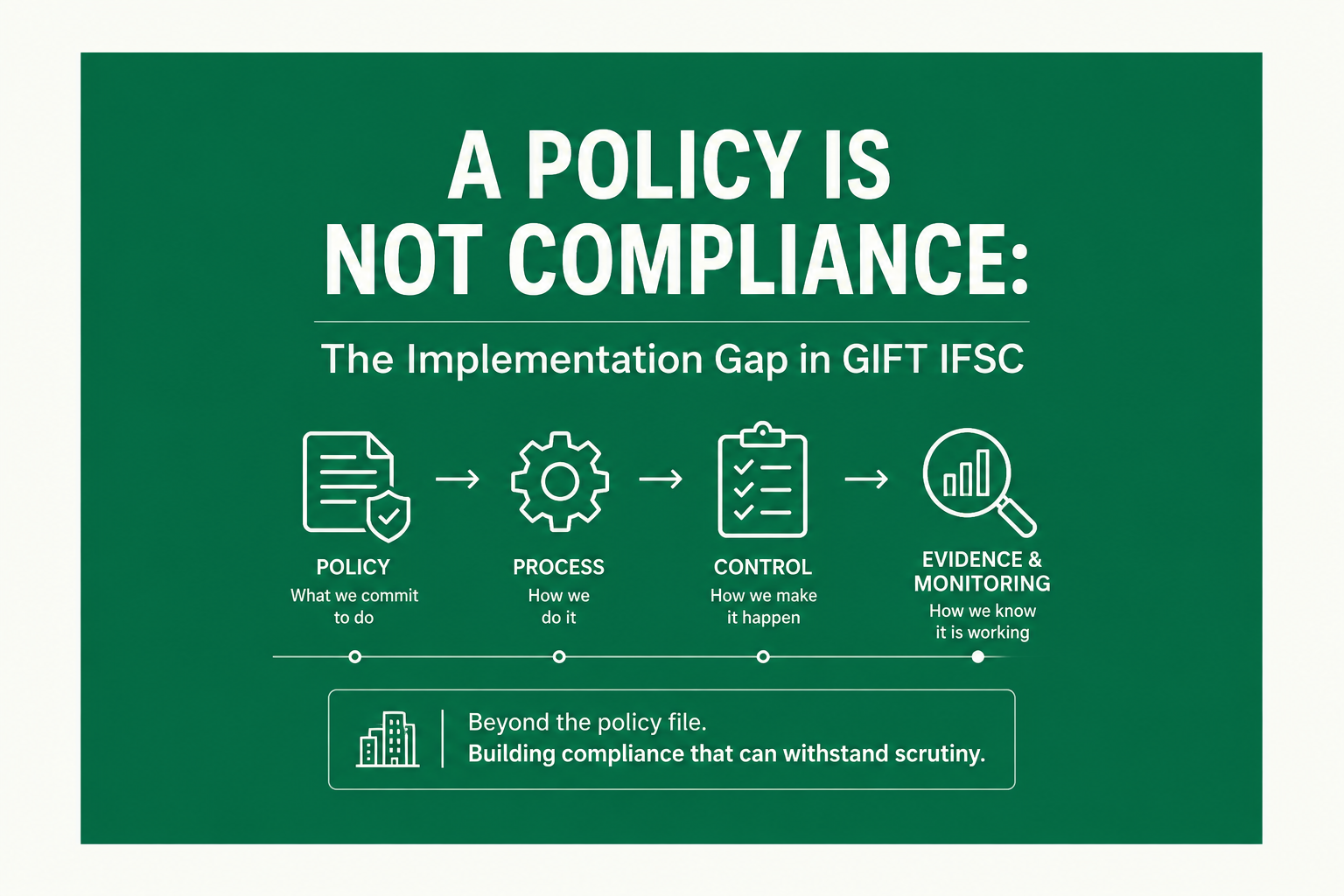
A practical regulatory guide to the mandatory internal policies required for IFSC Fund Management Entities under the IFSCA (Fund Management) Regulations, 2025. Covers compliance, risk management, AML, cyber resilience, valuation, governance frameworks, and strongly recommended best-practice policies to ensure inspection readiness and regulatory defensibility.