Introduction: where Indian IPO instincts usually fail
The first DRHP draft I see for a GIFT City listing almost always carries Indian IPO muscle memory. Risk factors are exhaustive but unfocused. Business sections over-explain domestic operations. FEMA disclosures appear as an afterthought. The regulator’s opening comment then lands with quiet finality: this document has been drafted like a SEBI IPO.
That moment is important. A DRHP for GIFT City is not a shortened Indian IPO document. It is a different disclosure instrument, written for a different regulator, a different investor audience, and a different capital-flow logic. Until that is internalised, the drafting will remain directionally wrong—no matter how compliant it looks.
What is a DRHP for GIFT City listings?
A DRHP for a GIFT City listing is a disclosure document filed with IFSC exchanges under IFSCA regulations, structured for international investors and cross-border capital flows, and built on materiality and investor relevance rather than Indian public-issue formalism.
That definition is not semantic. It determines how every section is written, what is emphasised, and—just as importantly—what is deliberately left out.
The governing authority is International Financial Services Centres Authority, operating within the international financial centre framework at GIFT City. The regulatory approach is principles-based. The investor base is assumed to be professional. The disclosure objective is decision-utility, not retail education.
Why a GIFT City DRHP is fundamentally different from an Indian IPO DRHP
The mistake is to think the difference is one of length or format. It is not. The difference is philosophical.
An Indian IPO DRHP is a prescriptive document. The regulator tells you what must be disclosed and, to a large extent, how it must be presented. Drafting success is measured by completeness and conformity. As long as every mandated item is covered, the document passes regulatory muster.
A GIFT City DRHP works in the opposite direction. The regulator is less interested in whether a disclosure exists and more interested in whether the disclosure meaningfully enables an investor to assess risk, value, and enforceability. Judgment is not optional here—it is expected. When something is excluded, the regulator assumes you made a conscious call, and will test that call if it appears questionable.
This is why copying SEBI IPO language into an IFSC DRHP almost always attracts comments. It signals defensive drafting rather than considered disclosure.
Investor audience: the silent driver of drafting style
Indian IPO documents are written for a mixed audience. Retail investors, HNIs, domestic institutions, and analysts all coexist. That reality shapes the tone: definitions are repeated, structures are explained patiently, and risk factors often read like encyclopaedias.
A GIFT City DRHP assumes none of that. The baseline reader is an institutional or professional investor accustomed to cross-border offerings. They do not need corporate law tutorials. What they want to understand is whether the issuer’s structure works, whether cash flows are real and repatriable, and whether enforcement risk is priced correctly.
As a drafter, this means restraint becomes a virtue. Over-explaining basic concepts weakens credibility. Precision, hierarchy, and clarity matter more than volume.
Risk factors: where drafting discipline is tested
Risk factors are the quickest way to tell whether a DRHP has been drafted with an IFSC mindset.
In Indian IPOs, risk sections are often expansive and defensive. The objective is to disclose everything that could conceivably go wrong, even if the probability is remote. The regulator tolerates that approach.
In a GIFT City DRHP, that strategy backfires. Risk factors are expected to be selective, ranked, and tightly reasoned. The regulator reads them not just as disclosures but as a window into management’s understanding of its own risk profile.
Generic Indian risks rarely carry weight unless they have a direct bearing on investor returns. What matters instead are cross-border risks: jurisdictional enforcement, currency exposure, sanctions, tax residency, regulatory overlap, and capital-control constraints. If these are buried under boilerplate, the document fails its purpose.
Business and operations: defining the disclosure perimeter
Another common error is treating the business section as a corporate biography.
In Indian IPOs, this is often acceptable. Legacy operations, historical evolution, and domestic market context are all laid out in detail.
In a GIFT City DRHP, the business section must be anchored to the listing entity and the capital-raising perimeter. Group structures are disclosed only to the extent they affect investor economics, control, or risk. Domestic operations are relevant only if they drive cash flows, create dependencies, or introduce regulatory exposure.
The question the drafter should constantly ask is simple: does this information help an international investor price the security? If the answer is no, the disclosure probably does not belong in the DRHP.
Financial information: less pedagogy, more economics
Indian IPO DRHPs often spend considerable effort explaining accounting treatments, historical performance, and year-on-year movements in granular detail.
In GIFT City listings, the emphasis shifts. Financial statements are typically prepared under IFRS or internationally aligned standards, and investors are assumed to understand them. The narrative focus moves to earnings quality, sustainability of cash flows, currency mismatches, and pro forma adjustments that reflect the post-issuance reality.
Historical numbers matter, but nostalgia does not. What matters is whether the financial story supports the investment thesis in an international context.
Use of proceeds and FEMA: where most drafts stumble
This is where Indian IPO habits cause the most damage.
Broad, flexible use-of-proceeds language that passes comfortably in a domestic IPO often triggers immediate questions in IFSC. The regulator is not looking for discretion; it is looking for traceability.
Every proposed deployment of funds must align with the cross-border structure. FEMA, ODI, ECB, or downstream investment implications cannot be siloed into a statutory annexure. They have to be woven into the use-of-proceeds narrative, the risk factors, and the structure diagram in a consistent way.
From an investor’s perspective, FEMA is not a legal footnote. It directly affects repatriation, valuation, and exit. Any ambiguity here is treated as a disclosure failure.
How IFSC regulators actually read a DRHP
Having worked through multiple IFSC review cycles, a few patterns are clear.
Regulators look for intentional drafting. They are quick to spot boilerplate. They test inconsistencies across sections more aggressively than missing disclosures. And they are comfortable with concise documents—as long as the conciseness reflects judgment, not omission.
A well-drafted GIFT City DRHP feels coherent. Each section speaks to the others. The structure tells a story that an international investor can follow without external explanation.
Draft for confidence, not caution
The most successful GIFT City DRHPs share one trait: they are drafted with confidence. Not regulatory bravado, but disclosure confidence—the confidence to prioritise, to exclude, and to speak directly to the real risks and economics of the transaction.
If you draft a GIFT City DRHP as if you are seeking approval, it will read like an Indian IPO document. If you draft it as if you are inviting a sophisticated investor to allocate capital, the regulator will usually follow your lead.
That is the mindset shift that separates workable IFSC documentation from merely compliant paperwork.
About the Author
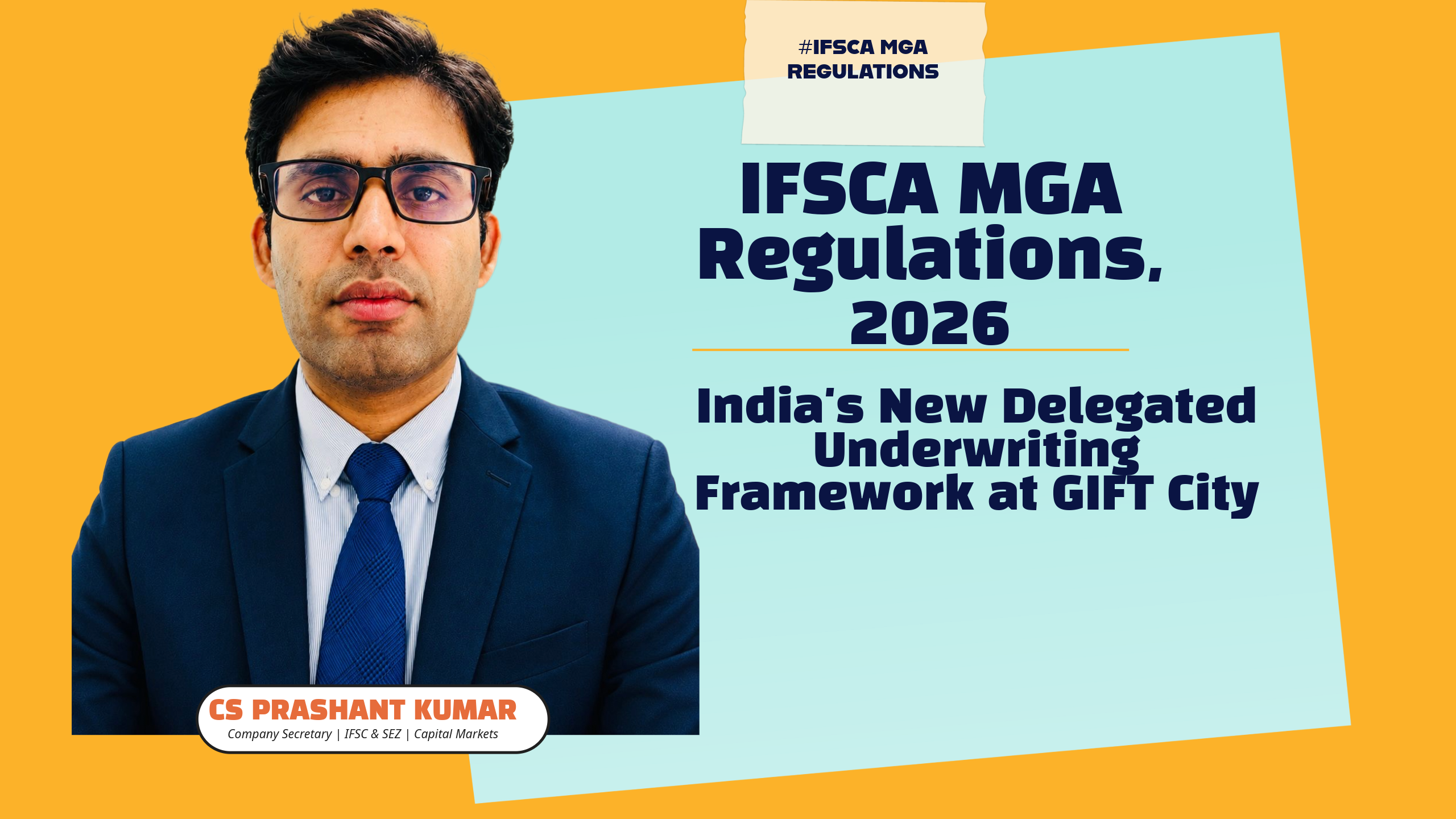
Prashant Kumar is a Company Secretary and Partner at Eclectic Legal, with hands-on experience in drafting and finalising DRHPs, Information Memoranda, and listing documentation for GIFT City (IFSC). He regularly advises issuers, lead managers, and foreign sponsors on IFSCA-facing disclosures, FEMA integration, and regulator-ready offer documents.
📞 +91-9821008011 | ✉️ prashant@eclecticlegal.com
Frequently Asked Questions (FAQs)
Is a DRHP mandatory for all GIFT City listings?
A DRHP is not universally mandatory. The requirement depends on the nature of the issuance, the investor category, and the exchange’s listing framework. Public or widely distributed offerings generally require a DRHP or equivalent disclosure document, while private placements may proceed on the basis of an Information Memorandum with calibrated disclosures.
Can an Indian IPO DRHP be reused for a GIFT City listing?
In practice, no. While some base information may overlap, direct reuse almost always leads to regulatory comments. The structure, tone, risk framing, and FEMA integration require substantial re-drafting to align with IFSC expectations.
Do SEBI ICDR Regulations apply to GIFT City DRHPs?
They do not apply as governing law. GIFT City listings are regulated by IFSCA, not SEBI. SEBI regulations may offer contextual guidance, but treating them as binding in IFSC documentation is a common mistake.
How detailed should FEMA disclosures be in a GIFT City DRHP?
They should be detailed enough for an overseas investor to independently assess repatriation, convertibility, tax leakage, and regulatory risk without external legal advice. If the investor has to infer outcomes, the disclosure is inadequate.
Who typically leads DRHP drafting for IFSC listings?
Effective DRHPs are usually led by Company Secretaries and transaction lawyers working closely with bankers and auditors. CS-led coordination is especially critical for FEMA mapping, group structure disclosures, and governance narratives.