How Indian founders should choose their global headquarters in 2025
Introduction
Indian founders now think global by default. Whether you’re building a SaaS company, owning IP, expanding across markets, or raising international capital, choosing the right jurisdiction shapes everything — tax, fundraising, regulatory scrutiny, long-term valuation, and even your eligibility for global visas.
The three destinations Indian founders compare most often are Singapore, Dubai (UAE), and Delaware (USA). Each offers a powerful ecosystem, but each is built for a different purpose. Singapore is known for legal predictability, tech-friendly regulation, and global investor trust. Dubai champions zero tax and operational ease. Delaware is the standard for US venture capital.
However, Indian founders cannot look at these jurisdictions in isolation. Every foreign structure must also satisfy FEMA, RBI, tax residency, and Indian reporting obligations — a point many overlook. For context, my earlier pieces on the Singapore Holding Company Strategy (https://csatwork.in/singapore-holding-company-indian-startups/) and How to Open a Singapore Company from India (https://csatwork.in/open-company-in-singapore-from-india/) offer important background on choosing and legally executing an overseas structure.
This comparative guide helps founders evaluate all three jurisdictions with clarity, context, and compliance precision.
Which Jurisdiction Gives Indian Founders the Most Global Advantage?
Singapore offers the most balanced global structure for Indian founders — strong tax treaties, predictable law, respected governance, and startup-friendly policies. Dubai works when taxes and residency are priorities, while Delaware is ideal if your customers or investors are US-first.
The right answer depends on your business model, investor base, revenue geography, and long-term goals. No jurisdiction is “best” universally — but one of them will be best for your expansion strategy.

Singapore — Stability, Reputation, IP Ownership, and Global Capital
Singapore has become the preferred headquarters for Indian SaaS, fintech, AI startups, and IP-heavy businesses. It provides unmatched legal clarity, world-class business administration, and strong protection for intellectual property through IPOS. Corporate tax is a flat 17%, but effective tax is usually lower due to exemptions for new companies.
The India–Singapore DTAA simplifies capital flows, royalty payments, and repatriation. Investors in the US, EU, and APAC naturally trust Singapore companies, making it easier for Indian founders to raise early and late-stage capital. Singapore also supports holding structures, which is essential for founders who want to own IP abroad while running operations in India through a subsidiary.
Most importantly, Singapore’s rules do not conflict with Indian FEMA laws when structured correctly — but you must ensure ODI/LRS reporting is done accurately. This is where founders often slip, especially when they transfer funds through fintech platforms instead of proper banking routes. (My FEMA compliance article covers this risk in detail.)
Dubai (UAE) — Zero Tax, Residency Benefits, and Commercial Flexibility
Dubai appeals to Indian founders for its 0% corporate and personal tax, lifestyle advantages, and fast-track business setup. For businesses selling into the Middle East, Africa, or Europe, Dubai provides proximity and operational ease. Many Indian entrepreneurs also look at Dubai because it offers long-term visas and residency options for founders.
However, Dubai is not always the best choice for technology companies that rely on global VC capital. Most investors still prefer Singapore or Delaware structures because of their legal predictability and familiarity.
Dubai also has no strong DTAA benefits with India for capital gains, and its tax-free status sometimes creates scrutiny under Indian tax law and FEMA, especially if the company has significant management activity in India. Founders must be careful to maintain real “substance” in Dubai — office, governance, decision-making — to avoid POEM disputes in India.
Dubai works best when the founder wants:
• Residency
• Zero tax
• Regional operations
• Lower regulatory friction
It is less ideal for global fundraising or IP-heavy companies where legal and governance reputation matter.
Delaware (USA) — Investor Credibility and US Market Access
Delaware is the global standard for venture-backed companies. If your customers, investors, or partners are primarily in the United States, Delaware is unmatched in terms of legal infrastructure, fundraising norms, and corporate governance.
However, Delaware is not inherently tax-efficient for Indian founders. US companies face federal taxation and potential state taxation. If the founder or operations are in India, the US entity may face complexity around transfer pricing, place of effective management, and source-of-income rules.
Delaware makes sense only when:
• Your target market is the US
• You plan to raise capital from US VCs
• Your IP or core team will shift to the US
• You are ready for US compliance (IRS, state filings, 83(b), payroll, etc.)
For purely Indian–APAC companies, Singapore usually achieves the same fundraising benefits with far less regulatory friction.
Which Jurisdiction Is Easiest for Indian FEMA Compliance?
Singapore is the most FEMA-compatible jurisdiction for Indian founders. Banks, regulators, and consultants in Singapore understand ODI and LRS structures well, and the India–Singapore capital flow ecosystem is mature.
Dubai is compliant, but RBI scrutinises transactions more closely due to round-tripping concerns and the tax-free nature of the UAE.
Delaware is compliant from an Indian law perspective, but the US tax reporting environment is heavy, making compliance more expensive and intense.
The biggest mistakes Indian founders make — in all three jurisdictions — arise from:
• funding the company through fintech platforms,
• skipping ODI or LRS reporting,
• not maintaining substance abroad, and
• ignoring tax residency risks.
These mistakes can be avoided entirely with proper structuring.
Which Jurisdiction Should You Choose Based on Your Business Model?
The choice becomes clearer when matched with intent:
If you want global credibility, clean IP jurisdiction, and international investors:
→ Singapore
If your priority is no tax, residency, and regional operations (MENA / Africa):
→ Dubai
If your business or funding is US-centric:
→ Delaware
For most Indian startups wanting to operate globally while maintaining India as their execution base, Singapore strikes the perfect balance of structure, tax, governance, and investor acceptance.
Summary Insight
Indian founders should not choose a global headquarters based on tax or trends alone. The real decision lies in understanding your market, investors, compliance obligations, and long-term structure. Singapore offers predictability and global trust, Dubai offers ease and tax benefits, and Delaware offers access to the US venture ecosystem.
The best jurisdiction is the one that aligns with your strategy, your compliance capacity, and your future valuation story.
FAQs
Is Singapore the best all-round jurisdiction for Indian startups?
Yes, for most cases. Singapore provides legal certainty, global investor trust, strong IP laws, and a tax regime that works well for holding companies and startups. The India–Singapore DTAA makes cross-border flows smoother. It is usually the best balance between reputation, compliance, and scalability.
When does Dubai work better than Singapore?
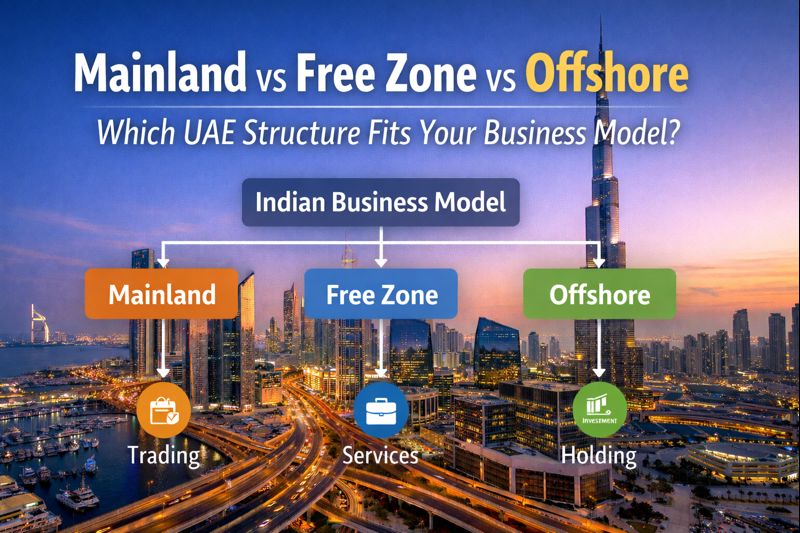
Dubai is ideal when the founder wants residency, zero tax, and a regional presence in the Middle East or Africa. It works well for trading, logistics, and consulting businesses. For tech startups seeking global capital, Singapore generally remains the stronger choice.
Is Delaware necessary for raising US venture capital?
If your core market or investors are in the US, Delaware is attractive because US VCs prefer it for legal familiarity. But if your customer base is global or APAC-focused, you don’t need Delaware — Singapore often satisfies international investors.
Which of the three is easiest to maintain from India?
Singapore. The compliance burden is lighter, banking is predictable, and governance requirements are aligned with international standards. Dubai is easy to start but requires substance to avoid POEM disputes. Delaware is manageable but involves heavier tax filings.
What is the biggest compliance mistake founders make?
Funding overseas companies through fintech platforms instead of through India’s authorised dealer banks. This leads to FEMA violations regardless of jurisdiction — Singapore, Dubai, or Delaware.
About the Author
Prashant Kumar is a Company Secretary, Published Author, and Partner at Eclectic Legal, specialising in cross-border structuring, FEMA compliance, and overseas business setup. He advises founders and family businesses on building globally credible structures in Singapore, Dubai, Delaware, and beyond. Reach him at prashant@eclecticlegal.com or +91-9821008011.