Almost every cross-border mandate I have handled in the last two years begins with the same conversation. The investor wants India exposure, but without the friction that comes with a straight-through onshore FDI route—pricing restrictions, layered approvals, downstream compliance, and an uncertain exit environment. In several of these deals, the Indian operating business was sound, the valuation was agreed, and commercial intent was aligned. What stalled the transaction was not appetite, but regulatory architecture. This is precisely where GIFT City has changed the playbook. Not as a policy slogan, but as a practical structuring tool that allows foreign capital to access India while remaining within a globally familiar financial framework.
What role does GIFT City play in enabling FDI into India?
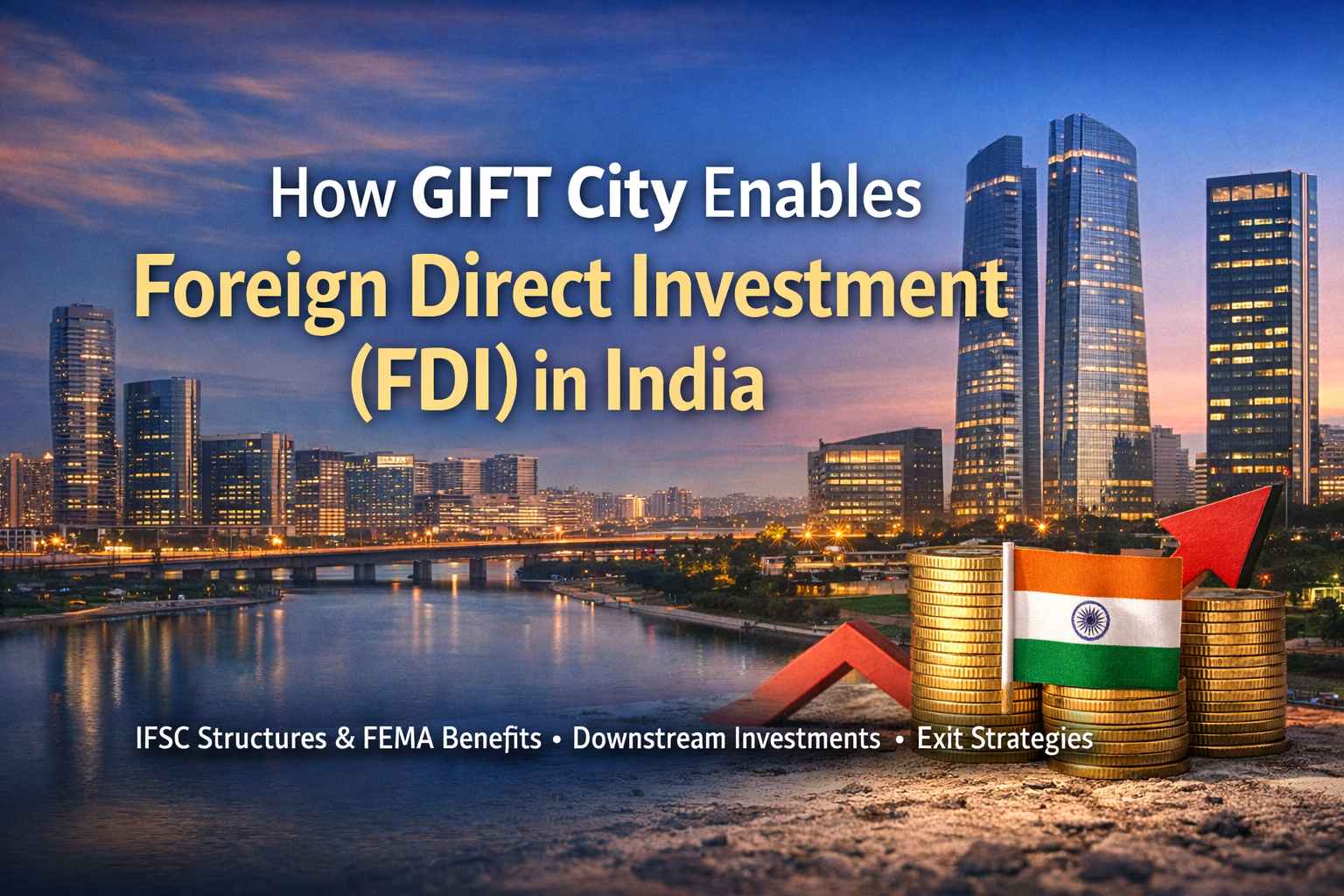
GIFT City enables FDI by allowing foreign investors to deploy capital through IFSC-based entities that operate in foreign currency, follow liberalised FEMA principles, and act as offshore-like gateways for downstream investment into India—reducing pricing rigidity, procedural friction, and exit constraints while retaining Indian regulatory certainty.
That answer captures the essence, but the real value of GIFT City lies in how this framework works in practice, how regulators read it, and how transactions are documented and defended.
Understanding GIFT City’s legal positioning in the FDI ecosystem
GIFT City’s effectiveness as an FDI conduit stems from its legal status as an International Financial Services Centre regulated by the International Financial Services Centres Authority. This single-regulator model replaces the traditional fragmentation between RBI, SEBI, IRDAI, and PFRDA. From a transaction advisory perspective, that consolidation alone removes weeks of interpretational uncertainty.
More importantly, IFSC units are treated as being outside the domestic customs and exchange-control territory for most operational purposes. While GIFT City is physically located in India, it is conceptually positioned as an offshore financial jurisdiction. This “inside India but outside India” character is what allows foreign investors to engage with Indian opportunities without being immediately subjected to the full onshore FDI machinery.
From a drafting standpoint, this distinction must be explicitly articulated in offer documents, Information Memoranda, and shareholder agreements. Regulators expect the issuer or fund to demonstrate that it understands why an IFSC structure is being used, not merely that it is permissible.
The problem with direct FDI: why investors look for alternatives
To appreciate how GIFT City enables FDI, it is important to understand why direct FDI routes often fail at execution stage. Onshore FDI into India, while liberal on paper, remains procedurally dense in practice.
Pricing guidelines are a recurring issue. Valuation formulas prescribed under FEMA are not always aligned with commercial realities, particularly in high-growth or stressed situations. Secondary transfers, structured exits, and internal reorganisations often trigger valuation mismatches that are difficult to justify to banks and regulators.
Sectoral caps and conditionalities add another layer of complexity. Even where 100% FDI is permitted, sector-specific conditions can restrict voting rights, downstream investment, or control structures. Investors with diversified portfolios find it inefficient to navigate these constraints deal by deal.
Exit remains the most significant concern. The ability to repatriate capital smoothly, at a market-driven price, within a predictable timeline, is central to any foreign investment decision. In India, exits are often constrained by regulatory approvals, pricing rules, and market depth.
GIFT City addresses these pain points not by removing regulation, but by relocating the investment interface to a jurisdiction designed for cross-border capital.
How foreign investors invest into GIFT City entities
The first leg of the FDI-enabling structure typically involves foreign investors investing directly into an IFSC entity. This entity may take the form of a holding company, a fund vehicle, a treasury centre, or a financing SPV.
From the investor’s perspective, this step feels similar to investing into Singapore, DIFC, or ADGM. Capital is contributed in foreign currency. Instruments are denominated in freely convertible currencies. Documentation follows international private placement standards rather than Indian domestic issuance templates.
Regulatory engagement at this stage is streamlined. Instead of multiple filings across RBI, SEBI, and authorised dealers, the interaction is largely centralised under the IFSC framework. That said, this does not mean disclosure standards are relaxed. On the contrary, IFSC regulators expect clarity, consistency, and commercial coherence in documentation.
In my experience, most regulator comments at this stage arise from poor articulation of the investment rationale or inconsistent FEMA positioning across documents.
Downstream investment from GIFT City into India: the real FDI bridge
The real test of GIFT City as an FDI enabler lies in downstream investment—how capital moves from the IFSC entity into India.
An IFSC entity can deploy funds into India by acquiring equity in Indian companies, subscribing to compulsorily convertible instruments, extending debt or ECB-like financing, or investing through Indian SPVs. These downstream investments are treated as foreign investment under FEMA, but the source of funds is an IFSC unit rather than a traditional offshore investor.
This distinction has practical consequences. Banks are generally more comfortable processing transactions where the immediate investor is an IFSC entity with clear regulatory oversight. Documentation flows more smoothly because the IFSC entity already operates within an Indian regulatory ecosystem, albeit a specialised one.
From a structuring perspective, this also allows investors to centralise India exposure at the IFSC level. Multiple Indian investments can be housed under a single IFSC holding structure, simplifying governance, reporting, and eventual exit.
FEMA treatment: relaxed, not removed
One of the most dangerous myths around GIFT City is that FEMA does not apply. It does—but in a modified and rationalised form.
IFSC entities enjoy several relaxations relating to capital account transactions, borrowing, lending, and repatriation. However, downstream investments into India must still comply with sectoral caps, prohibited sectors, and reporting requirements. The difference is that compliance is assessed with a greater emphasis on substance and intent rather than form.
This is where drafting discipline becomes critical. Offer documents must clearly explain the residential status of parties, the nature of instruments, the flow of funds, and the repatriation mechanics. Ambiguity invites regulator queries, even if the underlying structure is sound.
In IFSC transactions, FEMA disclosures are not boilerplate. They are a core part of the regulatory narrative.
Pricing flexibility and valuation logic
One of the strongest incentives for using GIFT City as an FDI gateway is pricing flexibility. At the IFSC level, entry pricing is largely market-driven. Investors and issuers can negotiate valuations based on commercial considerations rather than statutory formulas.
This flexibility is particularly valuable in scenarios involving growth capital, turnaround investments, or strategic acquisitions. It also simplifies secondary transfers, where valuation disputes are common under onshore FEMA rules.
When IFSC entities invest downstream into India, pricing guidelines do apply. However, by that stage, the investment quantum, structure, and timing are already optimised. The IFSC layer absorbs much of the valuation complexity, leaving the Indian leg cleaner and more defensible.
Sectoral caps and regulatory insulation
While GIFT City does not override sectoral caps, it provides a degree of insulation. Investors can hold interests in multiple Indian businesses across sectors through a single IFSC platform. This allows better portfolio management and risk allocation.
For example, an investor with exposure to regulated sectors such as financial services or infrastructure can segregate sector-specific compliance at the downstream level while maintaining consolidated control and governance at the IFSC level.
This layered approach is particularly attractive to institutional investors and sovereign funds, which value regulatory predictability and reporting efficiency.
Exit planning through IFSC structures
Exit strategy is where GIFT City delivers its most tangible FDI advantage.
Instead of exiting directly from an Indian company, investors can exit at the IFSC entity level. This may involve transferring shares of the IFSC holding company, redeeming instruments, or listing securities on an IFSC exchange.
Such exits are often simpler, faster, and less exposed to Indian pricing constraints. They also allow offshore buyers to acquire India exposure indirectly, without navigating onshore FDI approvals themselves.
From a documentation perspective, exit mechanics must be thought through at the structuring stage. Shareholder agreements, offer documents, and IMs should clearly outline exit pathways and repatriation logic. Regulators look closely at whether exits are realistic, not merely theoretical.
Role of IFSC capital markets in FDI inflows
GIFT City’s capital markets ecosystem plays a complementary role in enabling FDI. Equity and debt listings on IFSC exchanges allow foreign issuers and India-focused vehicles to raise capital without triggering Indian IPO norms.
Foreign investors can subscribe to these securities under globally familiar disclosure regimes. For issuers, this opens access to international capital pools while maintaining proximity to Indian assets.
From a DRHP drafting perspective, IFSC listings require a different disclosure philosophy. The focus shifts from retail protection to institutional clarity. This aligns well with foreign investor expectations.
Comparing GIFT City with offshore jurisdictions
A common question is whether GIFT City can replace traditional offshore hubs such as Singapore or Mauritius. In practice, GIFT City is not a replacement but an alternative.
Its advantage lies in sovereign alignment. Structures based in GIFT City are less vulnerable to treaty renegotiations, substance challenges, or geopolitical shifts. For India-centric investments, this stability is increasingly attractive.
However, tax and treaty considerations remain transaction-specific. Sophisticated investors often use hybrid structures, combining IFSC entities with offshore holding companies. The key is that GIFT City now features prominently in the structuring conversation, rather than being an afterthought.
Regulatory expectations: how IFSCA reads FDI-linked documents
In IFSC transactions, regulators expect coherence. They read offer documents, IMs, and filings holistically. Inconsistencies between FEMA disclosures, risk factors, and transaction structure are quickly flagged.
Common mistakes include:
- Treating IFSC relaxations as blanket exemptions
- Copy-pasting onshore FDI language without adaptation
- Failing to explain downstream investment logic
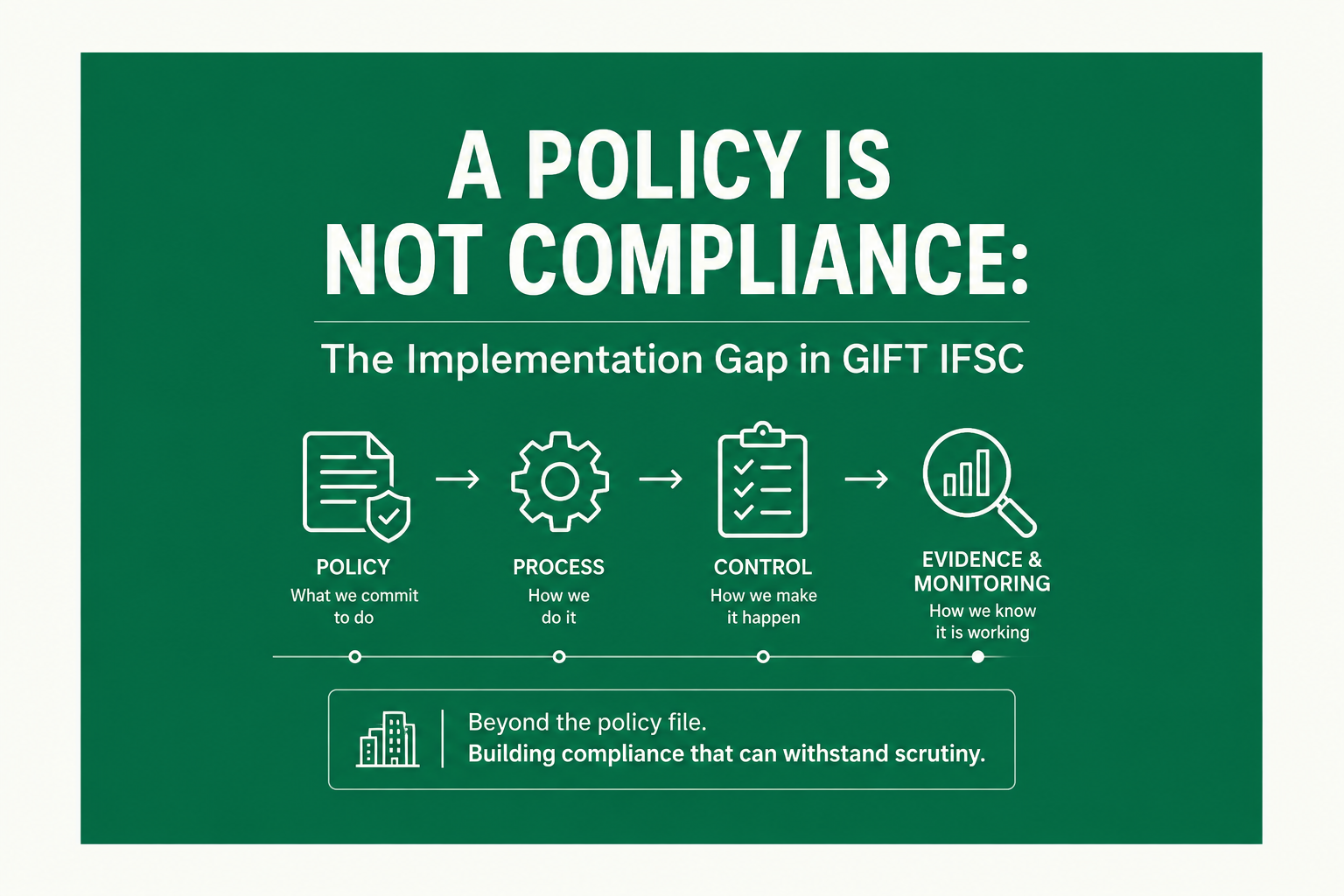
Good drafting anticipates regulator questions and answers them upfront. This is not about length, but about clarity and intent.
Wrapping Up
GIFT City has quietly become one of India’s most effective tools for attracting foreign capital—not by diluting regulation, but by redesigning the investment interface. For foreign investors, it offers offshore efficiency with onshore credibility. For Indian businesses, it opens access to global capital without the full weight of domestic FDI friction. The real differentiator, however, lies in execution. In GIFT City transactions, structure and documentation are inseparable. When both are aligned, GIFT City stops being a policy experiment and becomes a powerful FDI engine.
About the Author
Prashant Kumar is a Company Secretary and Partner at Eclectic Legal, with hands-on experience in structuring and documenting GIFT City (IFSC) transactions. He regularly advises foreign investors, issuers, and intermediaries on FDI-linked IFSC structures, FEMA positioning, DRHP drafting, and Information Memoranda for cross-border capital raises.
📞 +91-9821008011 | ✉️ prashant@eclecticlegal.com