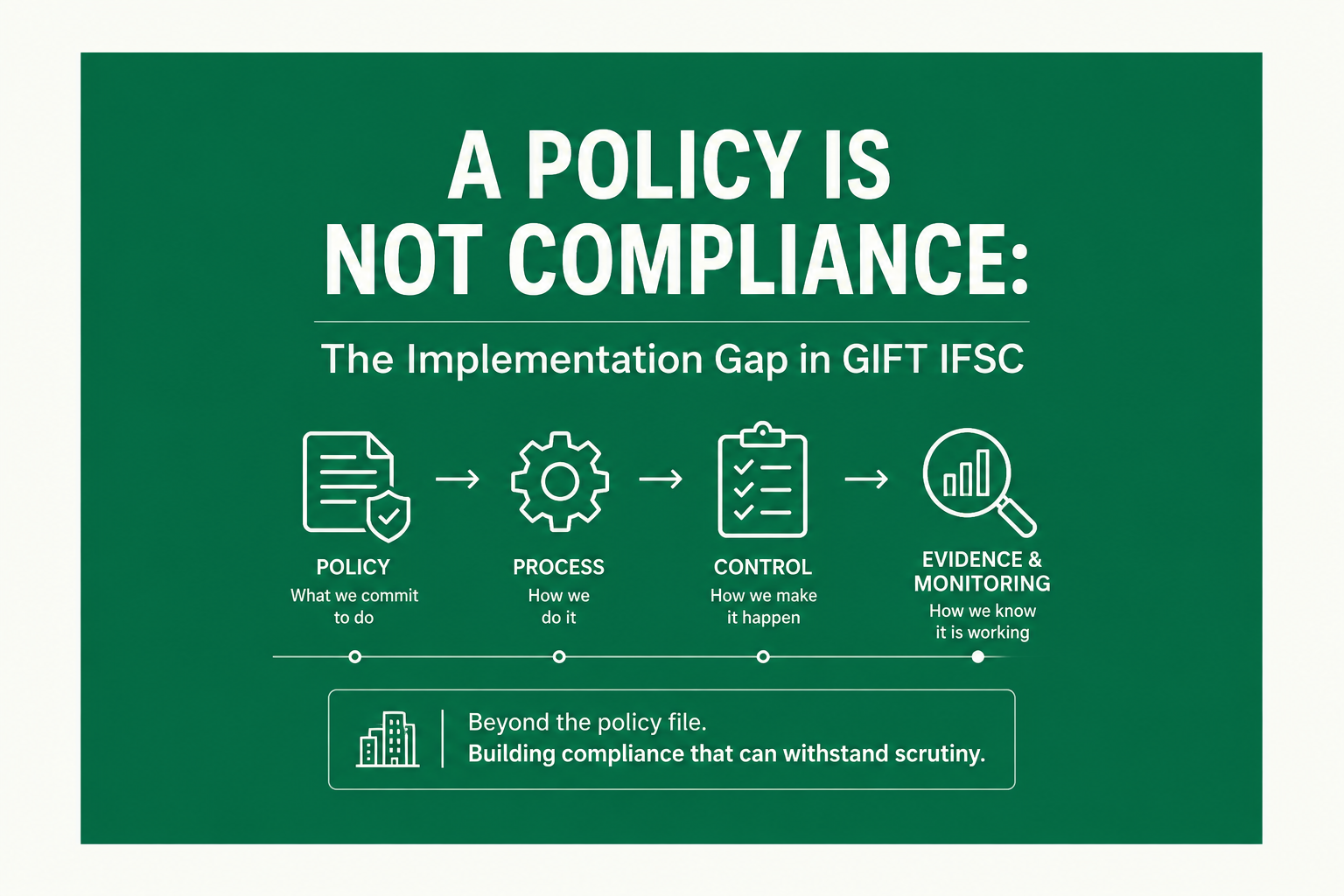
Having an AML/CFT policy does not necessarily mean that an organisation has an effective AML/CFT framework.
The more important questions are: Are the controls actually implemented? Are they operating effectively? And can the organisation demonstrate this through appropriate evidence?
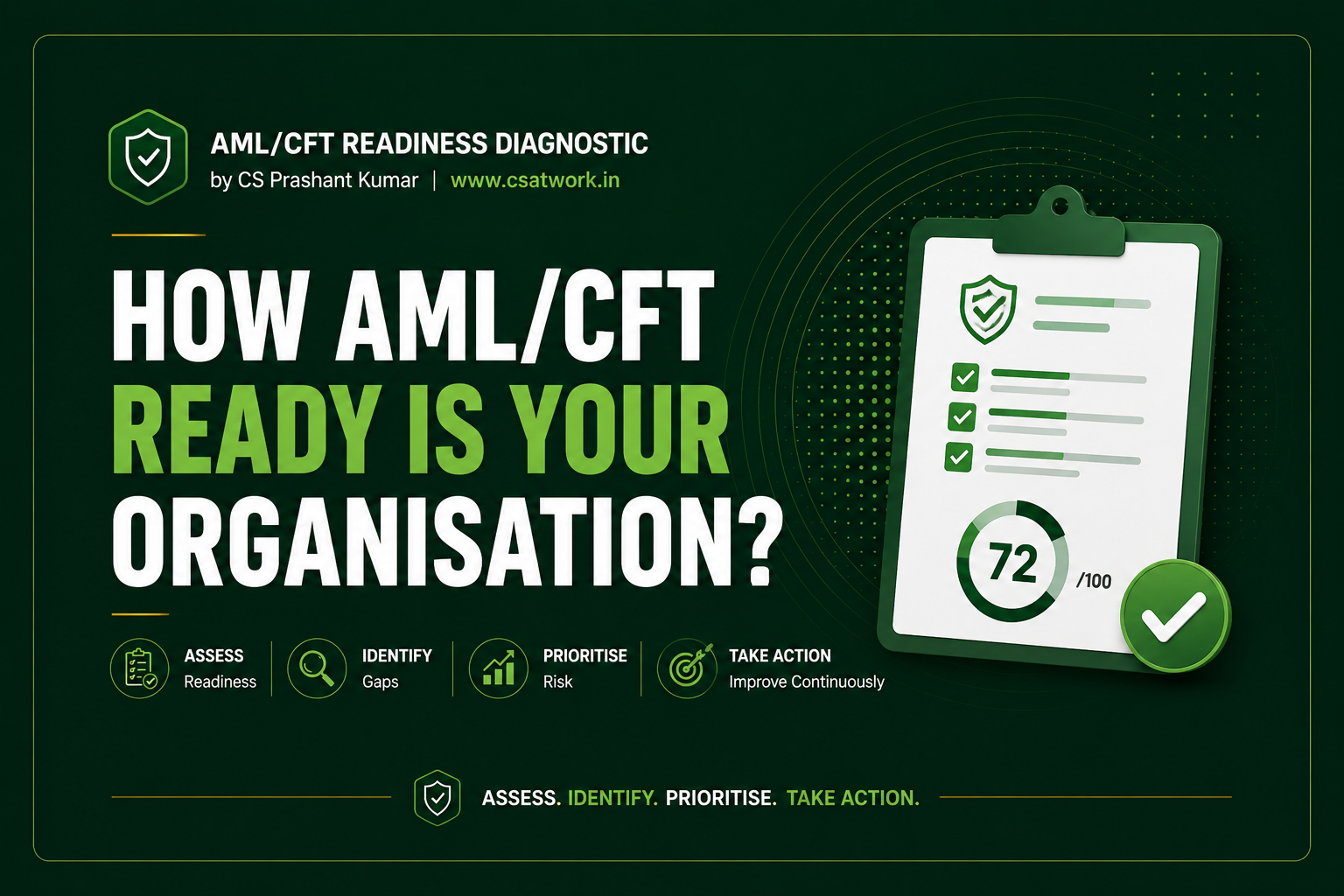
The AML/CFT Readiness Diagnostic by CS Prashant Kumar is designed to help organisations assess their current preparedness to prevent, detect and report money laundering, terrorist financing and related financial-crime risks.
This Is Not an AML Knowledge Test
Unlike a traditional quiz or knowledge test, the Diagnostic does not assess how much an individual knows about AML/CFT.
It evaluates the organisation’s actual framework.
Participants respond to practical questions about whether key controls are fully implemented, require improvement, are inconsistently implemented or are not yet in place.
The Diagnostic examines important areas including:
- AML/CFT governance and oversight
- ML/TF risk assessment
- Policies and internal controls
- KYC and customer due diligence
- Beneficial ownership
- Enhanced due diligence
- PEP and sanctions screening
- Ongoing customer monitoring
- Transaction monitoring
- Suspicious transaction identification and reporting
- Record keeping
- AML/CFT training
- Independent review and remediation
What Will You Get?
After completing the Diagnostic, participants receive more than a numerical score.
AML/CFT Readiness Score
Understand the organisation’s overall level of readiness based on the responses provided.
Category-Wise Analysis
See which areas of the AML/CFT framework appear strong and which may require further attention.
Priority Risk Identification
Findings are prioritised as:
Critical — Immediate Attention
High — Priority Remediation
Medium — Improvement Required
Low — Enhancement Opportunity
Strong controls are also identified.
Personalised Action Plan
The Diagnostic highlights priority gaps and provides practical recommendations on what should be considered for improvement.
Evidence Readiness
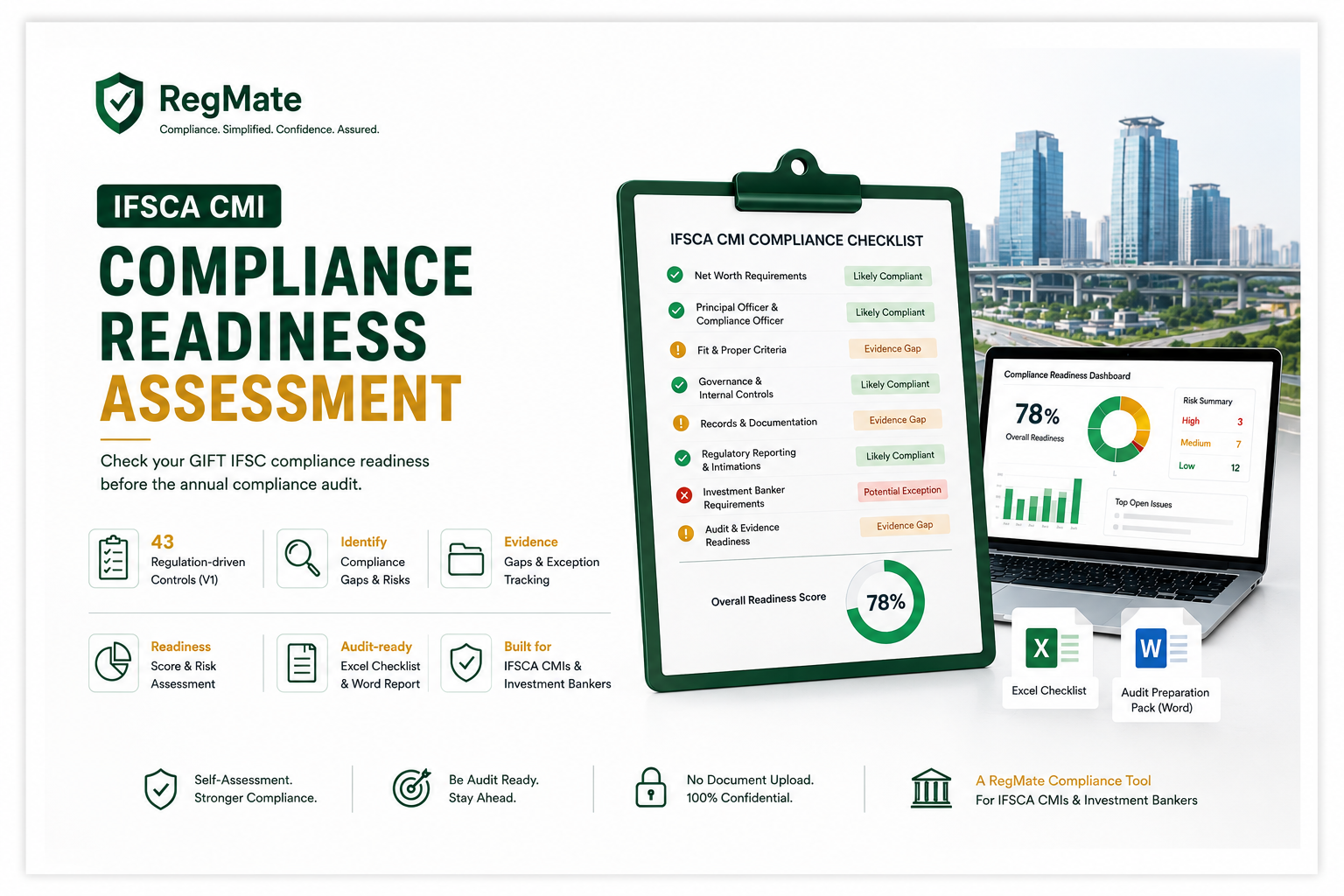
Participants can also understand the types of policies, records and implementation evidence that should ordinarily be maintained to demonstrate that key AML/CFT controls are operating in practice.
Why Take the Diagnostic?
A good AML/CFT framework should enable an organisation to answer five questions:
How prepared are we?
Where are our most significant gaps?
Which issues require immediate attention?
What should we improve next?
Can we demonstrate that our controls actually work?
The AML/CFT Readiness Diagnostic is designed to help organisations answer these questions through a structured and practical self-assessment.
Assess Readiness → Identify Gaps → Prioritise Risk → Take Action
AML/CFT Readiness Diagnostic
by CS Prashant Kumar | www.csatwork.in
The Diagnostic is a preliminary self-assessment tool based on information provided by participants. The results are indicative and do not constitute legal advice, regulatory certification or a definitive determination of compliance.